
Generac Generators
A whole-home Generac standby generator is typically an $18,000–$30,000 project in our area, because gas runs, pad work, and placement vary a lot by home. That's why standby quotes come from an on-site design visit, not a one-size number. If you already own a portable generator, an inlet and interlock kit ($900–$3,500) is the budget-friendly way to power essentials safely.
Typical pricing: Standby $18,000 – $30,000 · Inlet $900 – $3,500. Estimates, not quotes — your written price is confirmed after a photo review or a visit, and it never changes without your approval.
Standby vs. portable — the honest split
- Standby (Generac): automatic, whole-home capable, runs on natural gas or propane
- Standby: budget $18,000–$30,000 depending on size and gas work
- Standby: design visit, permit, pad, transfer switch, startup
- Portable + inlet/interlock: you wheel it out and plug it in
- Portable: $900–$3,500 for the inlet and interlock install
- Portable: runs your essentials — lights, fridge, furnace fan, outlets
Battery backup lives on its own page
Home batteries are a different tool — quiet, instant, and sized to your essentials, and we install them as a certified FranklinWH installer. Full details: Battery Backup.
What’s included
- Generator sizing from a real load review of your home
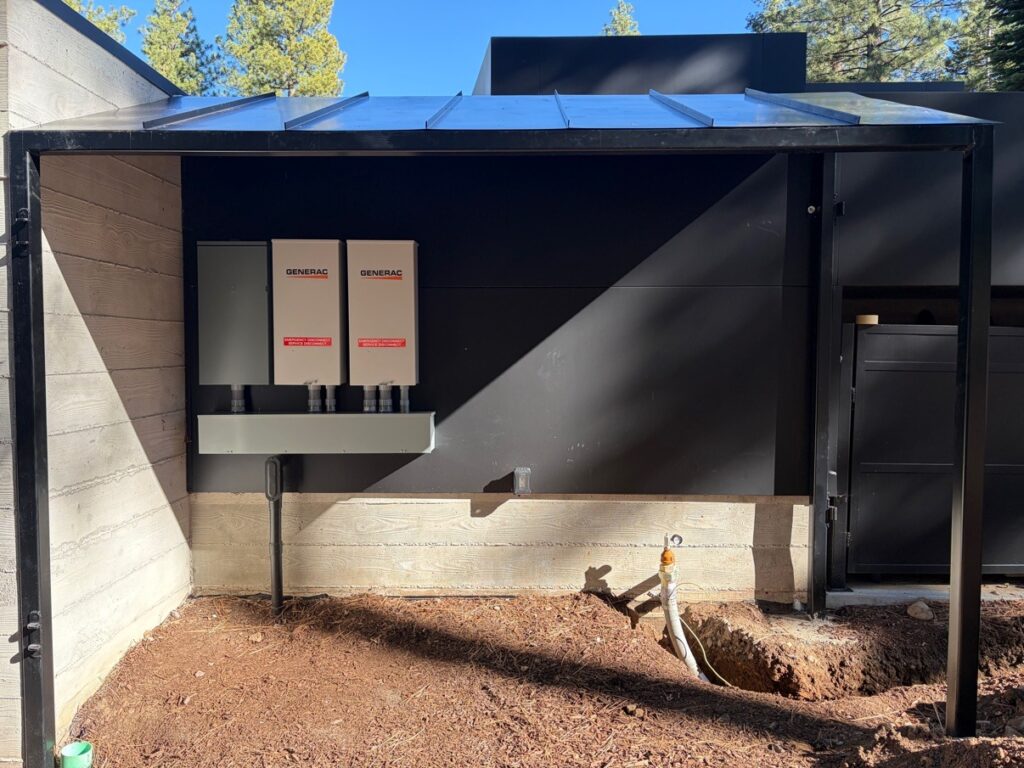
- Concrete pad, placement, and transfer switch
- Gas line coordination and permit handling
- Startup, testing, and a walkthrough of how it runs itself
- 10-year workmanship warranty on our labor
How it works
- Design visit — what do you need running in an outage?
- We size the unit, map placement and the gas run, and give a written price
- Permit and install, including pad and transfer switch
- Startup test under load, then we show you the monitoring and maintenance basics
What can move the price
- Generator size (essentials-only vs. whole home)
- Length of the gas run
- Trenching, pad, and placement conditions
Recent work
Rooster Electric Co on Google: 5.0 ★ · 150+ reviews
Fresh job stories are on the way — call (916) 235-3596 to talk about yours.
Generator questions
Standby or portable — which fits me?
Standby starts automatically whether you're home or not and can run the whole house. A portable with an inlet/interlock costs far less but you start it yourself and it covers essentials. We'll price both honestly.
What fuel does a Generac use?
Most run on natural gas or propane. If your home has neither, we'll talk through propane tank options at the design visit.
How long does install take?
Most standby installs take 1–2 days on site once the permit is in, plus inspection. The design visit comes first so there are no surprises.
Do you service them too?
We install and can walk you through the maintenance schedule; Generac units also report their own status through the manufacturer's monitoring app. Our Rooster Electric Annual Service Plan ($23/month or $259/year) adds a yearly whole-home safety inspection, priority scheduling, and 10% off repair labor.
Are you a Generac installer?
Yes — Rooster Electric is a certified Generac installer. We size the unit to your home, set the pad, wire the transfer switch, commission the system, and handle the permits, including fire department requirements where they apply.
I already own a portable generator. What do I need to use it safely?
An inlet box outside and an interlock at your panel. The inlet is where the generator plugs in; the interlock makes sure power can never backfeed into the utility lines while it runs your essential circuits. It is far less than a standby system and the right answer for a lot of homes.
Whole-home or essentials-only — how is a standby generator sized?
From what you actually need running in an outage. Whole-home sizing covers AC and the kitchen; essentials sizing covers the fridge, lights, well pump, and key circuits with a smaller unit. We review your loads at a design visit and size to that — not to a sales target.
What fuel does a standby generator run on?
Natural gas or propane, in most homes. If your home already has one of those, the generator ties into it. If it has neither, we talk through propane tank options at the design visit before anything is priced.
Do generator installs in Truckee or Placerville need fire department approval?
They can. Some foothill and Truckee jobs carry fire department requirements on top of the building permit, and in Truckee the fire department’s approval comes last in the sequence. We handle the permit package, including fire requirements where they apply, as part of the job.
Outages don’t have to mean a dark house
Call (916) 235-3596 for a generator design visit — we size to your real essentials, not to the biggest unit we can sell you.
Portable Generator Inlet & Interlock Installation — Connect Your Generator to Your House
If you already own a portable generator, an inlet box and an interlock are the safe way to connect it to your house. The inlet is a weatherproof plug mounted outside your home. The interlock is a small metal plate at your panel that makes it impossible to have the main breaker and the generator breaker on at the same time. You wheel the generator outside, plug one heavy cord from the generator into the inlet, and flip the interlock — and the circuits you choose run off the generator.
What you never do is run extension cords through a window or a door to power the house, or plug a generator into a wall outlet. Both can backfeed power onto the grid, which can injure utility workers, and both can overload wiring that was never meant for it. An inlet and interlock install typically runs $900–$3,500. Call Rooster Electric at (916) 235-3596 or request a quote and we will look at photos of your panel.
Interlock or transfer switch — which do I need?
It depends on the generator. An interlock is the right fit for a portable generator with an inlet: it is a simple, code-compliant plate at your panel that keeps the main and generator breakers from being on together. A transfer switch — automatic on a standby Generac, manual on some portable setups — physically switches your home’s power source and is the right fit for a standby unit that starts itself. Both do the same core job: they keep generator power from backfeeding onto the grid. We install both, and we will tell you straight which one fits your setup.